Anchor
Choose one dominant piece to establish scale: a sofa, dining table, bed, or substantial storage piece. Let everything else support it rather than compete with it.
FormHaven Editorial Guide
A precise framework for arranging furniture, shaping visual rhythm, and building rooms that feel calm, intentional, and complete.
A room starts with hierarchy
Choose one dominant piece to establish scale: a sofa, dining table, bed, or substantial storage piece. Let everything else support it rather than compete with it.
Preserve negative space around key silhouettes. Clear floor area, open wall space, and visible edges make furniture feel more deliberate and visually expensive.
Add rugs, curtains, lighting, vases, and wall art in measured layers. Each layer should contribute depth, softness, or contrast without overwhelming the architecture.
Remove anything that does not improve proportion, texture, function, or atmosphere. A refined room is often defined as much by what is omitted as by what is displayed.
Visual structure
Living composition
Start with the sofa as the visual anchor. Position the coffee table so movement remains easy, then use an area rug to connect the grouping. Curtains should extend the vertical line of the walls, while table lamps and wall art introduce smaller moments of contrast.

Bedroom composition
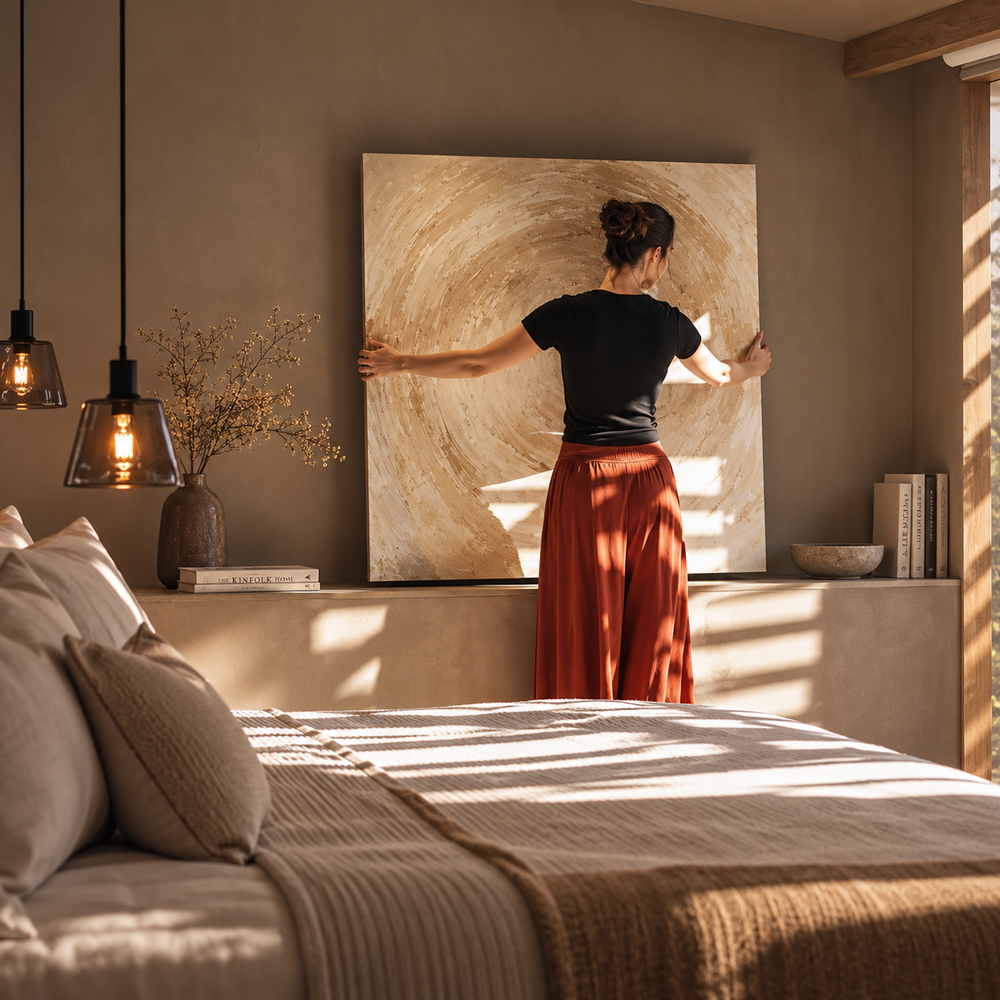
Place the bed as the dominant centerline, then soften that geometry through fabric, lighting, and asymmetric accents. A dresser can ground a secondary wall, while curtains and wall art carry the eye upward and keep the arrangement from feeling visually bottom-heavy.

Room-by-room recipes
Arrange sofas around a defined center, use the coffee table as a shared point, and let the rug create a visual boundary without closing the room.
Treat the dining table as the strongest geometric form. Leave generous clearance around it and use art or a sculptural vase to create a controlled focal point.
Establish the bed as the quiet center of the room, keep secondary furniture lower in contrast, and repeat soft textures rather than adding more objects.
Use a smaller furniture grouping, directional light, and one art element to make a corner feel deliberate without turning it into another full room.
Keep the entry visually clean. One grounded furniture piece, one sculptural object, and one vertical element are usually enough to establish tone.
Use rugs and furniture direction to separate living and dining areas while preserving long sightlines and a consistent material language.
Furniture placement matrix
| Category | Placement role | Spacing principle | Styling note |
|---|---|---|---|
| Sofas | Primary anchor for living areas and open-plan zones. | Leave a clear path around the seating group and avoid pressing every edge against a wall. | Pair with one strong coffee table and a rug large enough to visually connect the grouping. |
| Coffee Tables | Center point for seating arrangements. | Keep enough reach distance for use while preserving legroom and movement. | Style with one low arrangement, then leave open surface area visible. |
| Dining Tables | Geometric center for dining spaces. | Maintain generous circulation on every side and keep sightlines open. | Use a single vase or restrained centerpiece to avoid crowding the tabletop. |
| Beds | Primary centerline for bedrooms. | Give the bed visual breathing room and keep surrounding pathways consistent. | Balance the composition with soft textiles and controlled wall art. |
| Dressers | Secondary anchor and storage volume. | Position on a quieter wall so the room retains a clear hierarchy. | Keep the top surface edited and avoid filling the entire width with decor. |
| Area Rugs | Defines zones and creates visual continuity. | Scale the rug to the furniture group rather than to empty floor area. | Repeat one texture or tone from the furniture for cohesion. |
| Vases | Sculptural accent and vertical punctuation. | Use asymmetrically and avoid placing one on every available surface. | Choose shape before color; silhouette is what the eye reads first. |
| Curtains | Soft architectural frame. | Extend vertically to emphasize height and visually calm window edges. | Use fullness for softness while keeping the palette restrained. |
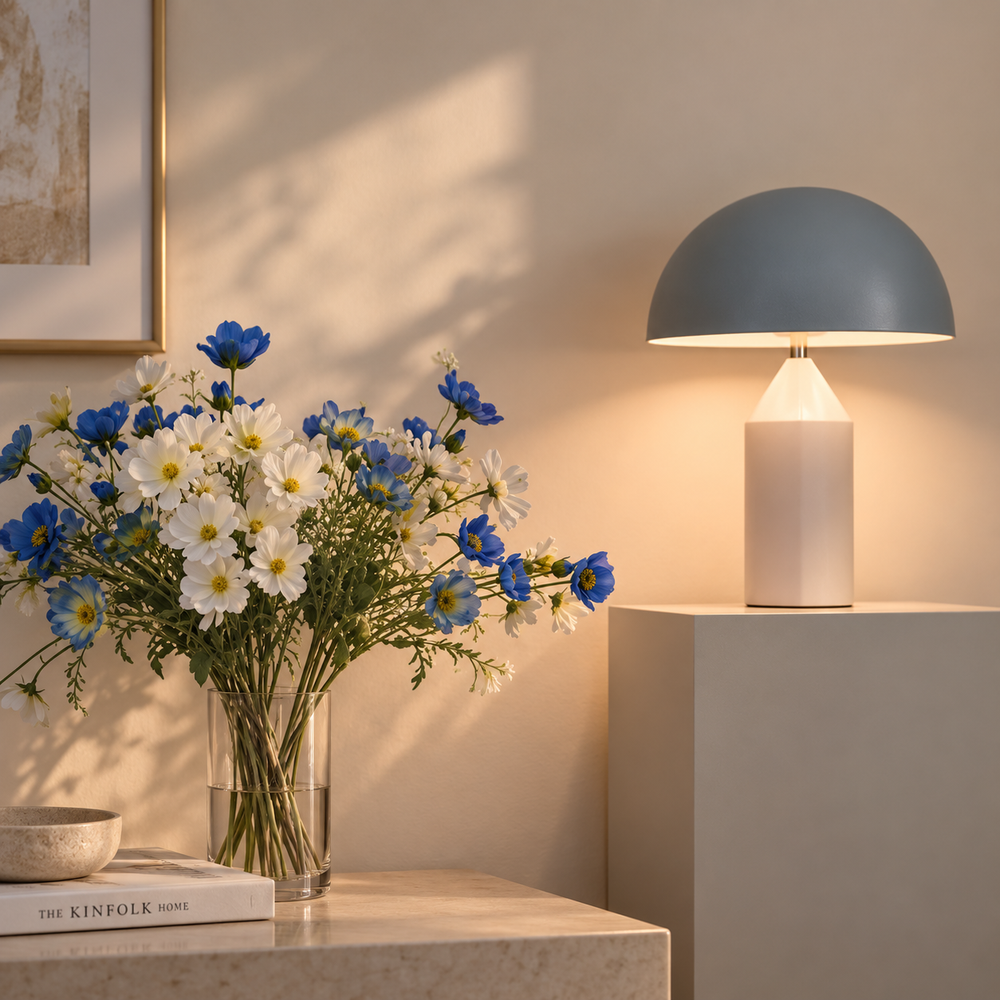
| Table Lamps | Localized light and evening atmosphere. | Place where illumination supports an activity or balances visual weight. | Mix with ambient room lighting rather than relying on one bright source. |
| Wall Art | Vertical focal layer. | Align art to furniture groups, not just to the center of an empty wall. | Leave surrounding wall space visible so the artwork feels intentional. |
Material + light framework
A refined room does not need many colors. It needs controlled contrast between matte and reflective surfaces, soft and structured textiles, low and high elements, and direct and diffused light.
Pair tables, dressers, and structured furniture with rugs, curtains, and upholstered forms so the space feels composed rather than severe.
Use subtle reflection sparingly. A polished object can lift a muted room, but repeated shine can make the space feel visually busy.
Coffee tables and sofas establish a low horizontal plane. Curtains, lamps, and wall art introduce vertical tension and stop the room from feeling flat.
Let broad room light establish the base level first, then add table lamps where warmth, focus, or evening atmosphere is needed.
Soft shadow creates depth around furniture and decorative objects. Avoid flattening the room with equally bright light in every corner.
Repeat related tones and textures across the room without making every piece identical. Cohesion comes from rhythm, not duplication.
Four-pass styling sequence
Position the sofa, dining table, bed, or dresser first. Confirm circulation and sightlines before adding any smaller element.
Use area rugs and table placement to create zones. The goal is to make separate pieces read as one controlled composition.
Add curtains, lamps, and wall art to carry the eye upward and distribute visual weight beyond the furniture line.
Introduce vases and smaller objects last, then remove anything that repeats a function, shape, or visual emphasis unnecessarily.
Six repeatable patterns
Let one large silhouette lead. Supporting objects should vary in scale and remain visually subordinate.
Preserve at least two visually calm boundaries around a focal grouping so the center feels intentional.
Limit a vignette to a small material vocabulary, such as wood, textile, and ceramic, for a cleaner read.
Begin with a balanced arrangement, then shift one element to create a more natural editorial tension.
A visible empty area on a table, dresser, or wall gives surrounding pieces more presence.
Evaluate the room in evening light. Adjust lamps and object placement until shadows reinforce the structure rather than obscure it.
Product relationships
Let the sofa establish the seating width, then choose a coffee table with enough presence to belong to the grouping without interrupting movement.
Use the rug to visually hold the seating group together. A rug that is too small can make even substantial furniture feel disconnected.
A sculptural vase gives the dining surface a focal point while keeping the composition quieter than a dense decorative arrangement.
Bedside lighting introduces a smaller warm light source that supports the room after overhead lighting is reduced in the evening.
Treat the dresser and artwork as one vertical composition. Keep the artwork proportionate to the furniture width rather than to the full wall.
Use these two textile layers to soften the architecture at different planes: curtains lift the eye vertically while the rug grounds the furniture below.
A localized lamp can illuminate a nearby artwork indirectly, creating a softer focal zone than direct task lighting or a bright ceiling fixture.
Give a sculptural vase enough empty space around it to register clearly. The negative space is part of the arrangement, not unused room.
Shopping with FormHaven
Customer support is available around the clock whenever you need help before or after your purchase.
Every product ships free, making it easier to plan a complete room without separate delivery fees.
Orders are delivered within 3–5 business days, helping you move from planning to installation with less delay.
Explore selected furniture and decor with a 20% reduction while promotional availability lasts.
Free returns and exchanges are available within 30 days for added confidence when styling your space.
Questions, considered
Use these guidelines as a flexible framework rather than rigid rules. Scale, architecture, natural light, and how you live in the space should always guide the final arrangement.
Start with the largest functional piece, such as a sofa, dining table, or bed. Confirm circulation around it, then add secondary furniture, textiles, lighting, and decor in that order.
Choose a rug large enough to visually connect the furniture grouping. In most living areas, the front legs of major seating pieces should comfortably sit on the rug rather than appearing isolated around it.
Prioritize natural walking paths and avoid compressing every piece against a wall. The exact distance depends on the room, but clear movement and visible negative space should remain part of the composition.
No. A stronger room usually combines related tones, proportions, or materials without making every piece identical. Repetition creates cohesion, while variation keeps the room dimensional.
Use one low arrangement or a small group of objects with different heights, then preserve open surface area. The table should still feel functional and visually calm.
Align wall art to the furniture grouping below it rather than simply centering it on the wall. This creates a stronger relationship between the vertical and horizontal elements of the room.
Use curtains to create a continuous vertical frame around the window. Generous length and controlled fullness soften hard architectural edges and can make ceilings feel taller.
Use fewer objects with stronger silhouettes. A vase or sculptural accent gains more presence when there is visible space around it and when nearby surfaces are not overloaded.
Use rugs, furniture direction, and lighting to define zones without adding visual barriers. Repeat selected materials across the zones so the full space still reads as one environment.
First check whether the room lacks vertical balance, soft texture, or localized lighting. Often one curtain treatment, one lamp, or one carefully placed artwork resolves the space better than adding more small decor.
Need help with an order or product?
