FormHaven Editorial

Design Journal

A continuing study of rooms, objects, proportion, light, material, and the small decisions that turn furniture into a complete way of living.

The FormHaven Design Journal looks beyond individual products to examine how a home actually comes together. We explore the relationships between sofas and tables, beds and lighting, rugs and architecture, curtains and daylight, and the decorative objects that make a room feel distinctly personal.

Edition Vol. 01
Primary Study Living Spaces
Design Lens Warm Restraint
Journal Focus Home In Layers
Refined contemporary living room with sofa, tables, lighting, and layered home decor
Journal Study / Living 01 570 PX Editorial Frame
Feature 01 / Spatial Rhythm

The Room Begins With Distance

Before color, before decoration, and even before style, a room is shaped by the distance between its objects.

A sofa can be beautiful on its own and still feel wrong in a room if the relationship between its depth, the coffee table, the rug, and the surrounding open space is unresolved. The eye reads those distances before it notices the finer details.

Good interiors therefore begin with spacing rather than filling. A coffee table should feel close enough to belong to the seating arrangement without crowding it. A rug should connect the major pieces without visually shrinking the floor. A lamp should occupy a useful zone of light without becoming an obstacle.

The objective is not emptiness. It is controlled breathing room: enough negative space for each form to register, while maintaining enough connection for the room to feel composed.

Editorial Principle Space is not what remains after furniture is placed. Space is one of the materials.

Living Room Systems

The Living Room Is A Conversation Between Objects

The strongest living spaces do not ask every piece to compete for attention. They establish hierarchy.

The sofa normally carries the greatest visual mass, which makes it the natural anchor. From there, the coffee table introduces a lower horizontal plane and creates a center of gravity. A rug expands that center across the floor and gives separate pieces a shared visual territory.

This is why a room can feel disconnected even when each product is attractive. If every object behaves independently, the eye has no clear route through the space.

Lighting then establishes vertical punctuation. Table lamps create smaller pools of attention while curtains control the larger field of daylight. Wall art adds a final point of orientation above the furniture line.

When those layers are balanced, the room becomes easier to understand. The architecture provides the shell; furniture establishes structure; décor establishes character.

01 / Anchor

Start Large

Let the sofa establish the first proportion before adding smaller objects around it.

02 / Ground

Connect Below

Use a rug to create one visual field beneath furniture rather than several isolated islands.

03 / Finish

Add Height

Lamps, curtains, and wall art build vertical rhythm after the main furniture is resolved.

Coffee Table Study

The Quiet Power Of A Low Horizontal Form

A coffee table controls the visual pace of the living room because nearly every line around it eventually points toward the center.

A longer table stretches the room horizontally and can make a substantial sofa feel more balanced. A compact table leaves more visible flooring and creates a lighter center. Rounded forms soften movement paths, while stronger rectangular forms reinforce architectural order.

Height also matters. A table that sits too high can interrupt the visual calm of the seating line. One that sits too low can lose functional presence. The ideal relationship is less about a universal measurement than a convincing connection to the furniture around it.

The surface itself should not become a storage zone for decoration. A deliberate arrangement of one vase, one object, or a restrained grouping often has more impact than a dense collection.

Negative space on the tabletop is useful. It preserves the functional reason the object exists while also giving the selected decorative pieces enough room to register.

FormHaven Design Note / 02

A refined room is not defined by how much it contains, but by how clearly each element earns its place.

Edit for relationship, not accumulation.

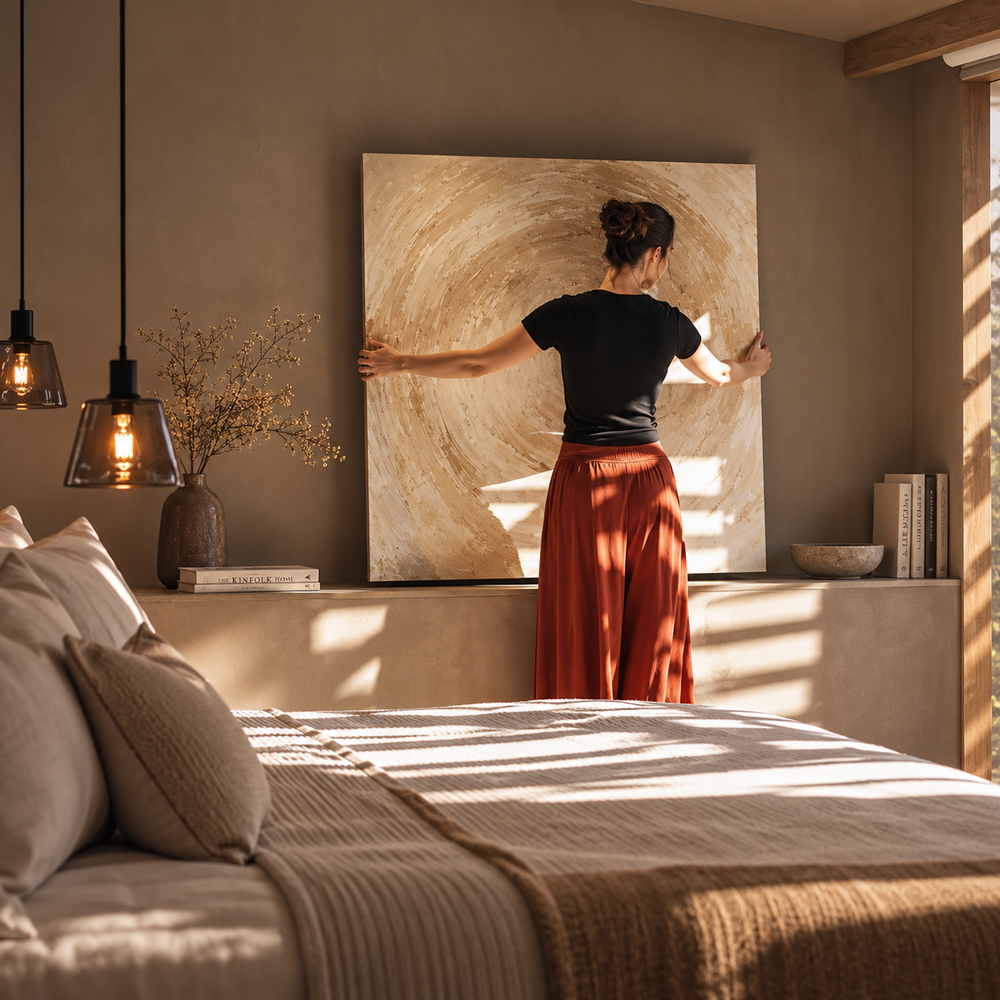
Elegant bedroom interior with refined furniture, soft textiles, lighting, and contemporary decor
Journal Study / Bedroom 02 570 PX Editorial Frame
Feature 03 / Rest

Building A Bedroom Around Calm

Bedrooms benefit from a different kind of hierarchy. The objective is not visual activity, but controlled quiet.

The bed naturally dominates the room, so its silhouette should feel stable rather than overly complicated. A clear headboard shape, calm bedding, and sufficient space around the frame help establish visual rest before decorative decisions are introduced.

Dressers and bedside surfaces should support that calm rather than compete with it. Their role is partly functional and partly architectural: they introduce horizontal structure while containing the visual noise of everyday objects.

Lighting completes the atmosphere. Instead of relying only on one overhead source, a table lamp can create a smaller, more intimate zone. Curtains then control daylight and soften the boundary between the room and the exterior.

Bedroom Principle Reduce visual decisions where the room is meant to restore attention.

Material Notes

Material Intelligence

A sophisticated interior rarely depends on one finish. Depth comes from contrast between surfaces: something solid beside something soft, something reflective beside something matte, something structured beside something fluid.

01 / Wood

Warm Structure

Wood gives tables, dressers, and other furniture visual weight while introducing grain, natural variation, and tactile warmth.

02 / Textile

Soft Volume

Upholstery, rugs, and curtains absorb visual hardness and make architectural rooms feel more human and approachable.

03 / Glass

Visual Lightness

Transparent and reflective surfaces allow light to move through the composition without adding excessive visual mass.

04 / Light

Active Material

Light changes every surface it touches, making illumination one of the most influential materials in the room.

Rugs And Curtains

When Textile Becomes Architecture

A rug redraws the floor. A curtain redraws the wall. Both can change how large, soft, bright, or complete a room feels.

In a living room, an area rug creates an invisible boundary around the furniture it connects. A generous scale can make separate pieces feel intentional and unified. A rug that is too visually isolated can have the opposite effect, making the room appear divided into smaller fragments.

Texture also affects perceived warmth. Even when the palette remains quiet, a tactile rug can prevent a minimalist space from feeling visually thin.

Curtains influence the vertical scale of the room. When they occupy more of the wall, they soften the hard geometry around windows and create a larger field of textile movement.

Their relationship with daylight is equally important. Filtered light creates gradients and shadow transitions that change the character of furniture throughout the day. In that sense, curtains are not simply decoration. They are part of the lighting system.

Vases, Lamps & Wall Art

The Final Ten Percent Changes Everything

Furniture establishes the room. Decorative objects explain who the room belongs to.

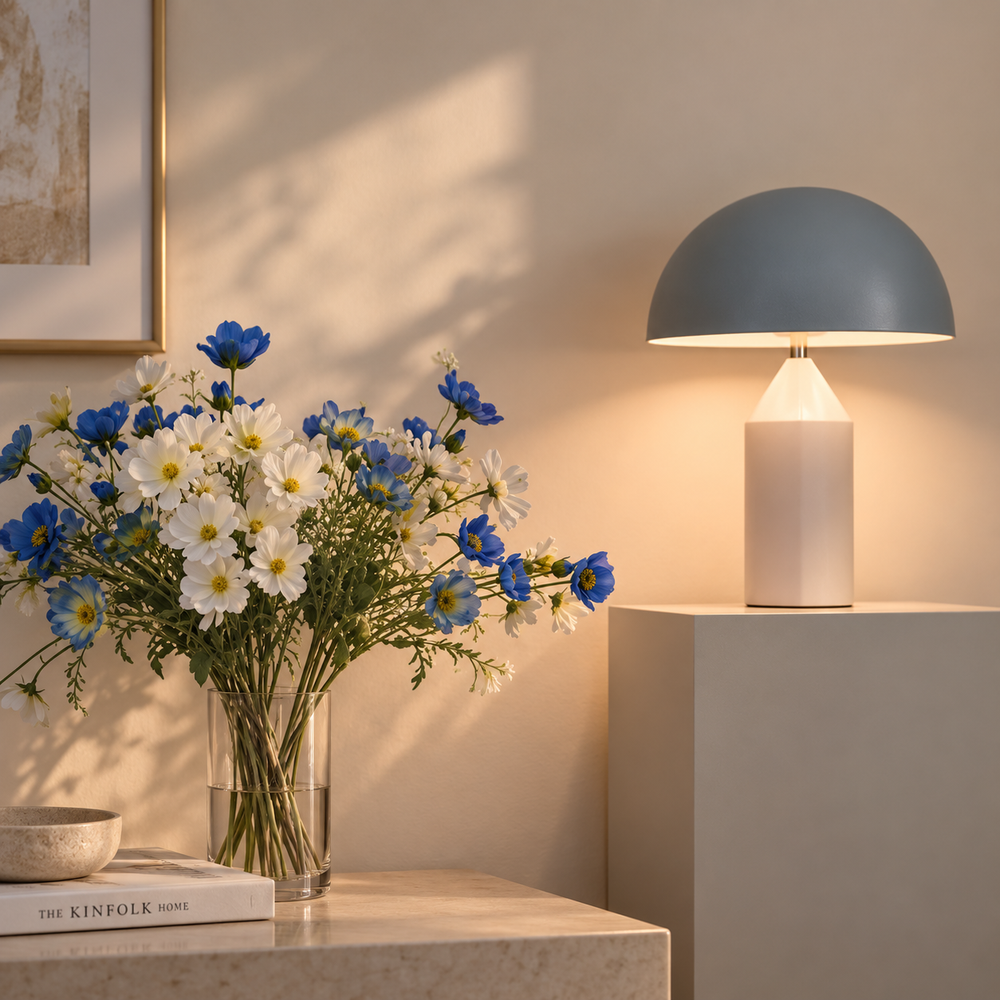
A vase introduces a smaller sculptural gesture to a table, dresser, or shelf. Its impact often comes from silhouette rather than decoration. A single strong form can create a deliberate pause within a broader composition.

Table lamps perform a dual role. By day they act as objects; by evening they change the atmosphere around them. This makes their proportion important even when they are not switched on.

Wall art operates at a different scale. It can visually connect furniture to the architecture above it, establish a focal point, or introduce contrast into an otherwise quiet room.

The key is restraint. Finishing does not mean filling every empty surface. A room often feels more resolved when selected objects are given enough space to be seen clearly.

01 / Object

One Strong Form

Choose a vase or accent with a clear silhouette instead of relying on multiple small objects.

02 / Light

Layer The Glow

Use table lamps to build smaller zones of warmth rather than asking one source to light the entire room.

03 / Art

Hold The Wall

Let wall art relate to the furniture below it so the upper and lower halves of the room feel connected.

FormHaven Design Note / 03

The goal is not to create a room that looks finished once. It is to create a room with enough clarity to evolve beautifully.

Timelessness begins with room for change.

Field Notes

Small Decisions With Large Impact

These are the principles we return to when thinking about rooms: concise observations that can help clarify proportion, composition, atmosphere, and the relationship between furniture and décor.

Note 01

Leave A Margin

Furniture reads more clearly when it is not pressed against every boundary. A small amount of controlled negative space can make a large object feel lighter and a small room feel calmer.

Note 02

Repeat A Line

Horizontal or vertical relationships can quietly connect unrelated objects. The height of a coffee table, the seat line of a sofa, and the lower edge of wall art can create visual rhythm without obvious matching.

Note 03

Contrast Texture

A room becomes more dimensional when smooth and tactile surfaces sit beside one another. A soft rug beside a structured table or a fluid curtain beside a clean wall creates depth without adding another color.

Note 04

Control The Center

In living spaces, the middle of the room carries unusual visual importance. Keep the coffee table area intentional so movement, scale, and decoration remain balanced around it.

Note 05

Light In Layers

Daylight, overhead illumination, and table lamps each produce different visual conditions. Rooms feel more atmospheric when several gentle sources are allowed to work together.

Note 06

Finish Slowly

Decorative objects are more effective when they arrive after the larger composition is clear. Give a room time before filling every surface. What remains empty may be part of the final design.

Journal Guide

Design Questions

A practical extension of the journal, focused on common decisions around furniture, décor, spacing, materials, and room composition. All questions remain closed until selected.

01 What should I choose first when designing a living room?

Start with the object that establishes the greatest visual and functional weight, which is usually the sofa. Once its scale and position are clear, the coffee table, area rug, lighting, and decorative pieces can be selected in relation to that anchor rather than independently.

02 How can I make a room feel refined without making it feel empty?

Focus on strong forms, useful objects, tactile materials, and deliberate spacing. Refinement does not require removing warmth or personality. It means allowing selected pieces to have a clear purpose and enough surrounding space to be visually understood.

03 Do furniture pieces need to match exactly?

No. A sophisticated room often benefits from controlled variation. Pieces can relate through proportion, line, material, or visual weight without sharing the same finish or shape. Connection is more important than exact matching.

04 How should I use area rugs in an open living space?

Use the rug to define the visual territory of the seating group. A scale that relates clearly to the sofa and surrounding furniture can make the arrangement feel unified while helping distinguish it from adjacent dining or circulation areas.

05 What role do curtains play beyond privacy?

Curtains influence light, perceived ceiling height, wall scale, softness, and visual movement. Because they occupy a large vertical area, they can change the atmosphere of a room as much as a substantial piece of furniture.

06 How can decorative objects feel intentional instead of cluttered?

Reduce the number of objects and increase the amount of space around the strongest ones. A vase, lamp, or artwork can create more impact when it is allowed to stand clearly rather than compete with several smaller decorative elements.

07 How does FormHaven approach modern home design?

FormHaven approaches modern interiors through warm restraint: clean structure balanced by comfortable proportions, tactile surfaces, thoughtful lighting, and decorative details that add personality without overwhelming the room.

Continue The Conversation

Design Is A Process Of Looking More Closely

The FormHaven Design Journal is built around that process: observing how furniture behaves in a room, how light changes material, how proportion affects comfort, and how the smallest finishing piece can shift the entire composition.

Our aim is not to prescribe one perfect interior. It is to provide a clearer framework for creating a home that feels balanced, considered, and unmistakably your own.

Explore the journal from the beginning or reach FormHaven support whenever you need assistance with a product or order.

Return To Featured Story