Clear Proportion
A strong silhouette should read immediately. Scale, negative space, edge profiles, leg placement, cushion depth, and overall mass should work together without visual clutter.
A closer look at the materials, construction, proportion, surface, texture, and finishing details that shape the furniture and home objects we choose for FormHaven.
Good craftsmanship is often felt before it is explained.
It appears in the way a table feels visually grounded, the rhythm of a dresser front, the curve of an upholstered edge, the weight of a curtain as it falls, or the way a lamp balances light and material. These details may be quiet, but together they determine whether an object feels considered or merely assembled.
FormHaven brings furniture and décor together through a shared point of view: refined forms, tactile materials, warm restraint, and details that support everyday living. Because materials and construction vary by product, individual product pages remain the definitive source for dimensions, composition, care instructions, and technical specifications.

Craftsmanship is not only a close-up detail. It also affects the visual architecture of a room. The height of a sofa, the span of a dining table, the volume of a bed, and the scale of a work of wall art all contribute to how calmly a space reads.
We favor pieces that can carry visual presence without relying on excess decoration. Curved silhouettes may soften an architectural room. Strong stone or wood surfaces may add permanence. Linen, velvet, boucle, glass, ceramic, metal, and woven textiles can introduce contrast while keeping the overall environment coherent.
Proportion should create relationships between objects rather than competition between them.
Our point of view begins with four practical ideas. They apply differently across sofas, tables, beds, dressers, rugs, curtains, lighting, vessels, and wall art, but they create a consistent standard for how a piece should look, feel, and live within a home.
A strong silhouette should read immediately. Scale, negative space, edge profiles, leg placement, cushion depth, and overall mass should work together without visual clutter.
Grain, weave, stone movement, glaze, metal finish, pile, upholstery texture, and translucency add identity that cannot be created by shape alone.
Seams, joins, drawer alignment, hardware placement, piping, hems, edge transitions, and repeated motifs should feel deliberate rather than distracting.
A beautiful object must still support real life. Seating should invite use, storage should remain accessible, textiles should drape naturally, and surfaces should suit their intended role.
Material quality is not defined by a single finish or construction type. Different objects ask different things of wood, stone, textile, glass, ceramic, and metal. What matters is whether the material supports the form, function, and atmosphere of the piece.
Wood brings warmth, direction, and visual rhythm. Grain consistency, edge treatment, finish uniformity, structural placement, and the relationship between top surfaces and bases all influence the final impression.
Look for balanced grain, clean edges, stable support, and a finish appropriate to daily use.
Marble, travertine, sintered stone, and stone-inspired surfaces introduce weight and natural movement. Veining and tonal variation can make each surface feel visually distinctive.
Look for proportion, edge profile, surface continuity, and an appropriate support structure.
Linen, velvet, boucle, leather, and performance fabrics change both the tactile and visual character of seating and beds. Tailoring matters as much as texture.
Look for controlled seams, consistent tension, thoughtful cushioning, and clean transitions around curves.
Brass, steel, and other metal finishes can act as structure, hardware, trim, lighting detail, or sculptural accent. Small variations in sheen can dramatically change the mood.
Look for even finishing, purposeful placement, stable connections, and restrained visual contrast.
Clear, tinted, textured, and reflective glass can reduce visual weight while introducing light and depth. Edge quality and integration with surrounding materials are especially visible.
Look for clean edges, balanced thickness, secure support, and intentional transparency.
Ceramic vessels and lamp bases can introduce softly irregular surfaces, glaze variation, sculptural volume, and handmade character within a more structured interior.
Look for expressive form, a stable base, considered glazing, and a finish that complements the silhouette.
Rugs and curtains influence a room at architectural scale. Density, pile, weave, pleating, edge finishing, and drape affect both comfort and the way light moves through a space.
Look for tactile depth, controlled finishing, natural movement, and a scale that supports the room.
Our craftsmanship perspective is a sequence rather than a single test. We begin with silhouette and intended use, then move through construction, material, touch points, finishing, and finally the relationship between the object and the room around it.
We begin with scale, geometry, curve, visual weight, and proportion. The object should establish a clear identity before decorative details are considered.
Bases, frames, supports, drawers, legs, platforms, suspension systems, and connection points determine how convincingly the piece carries its own form.
Grain, weave, glazing, veining, pile, patina, polish, and matte finishes create the tactile character that makes an object feel warm, architectural, soft, or sculptural.
We consider hardware placement, seam direction, repeated lines, edge consistency, visual symmetry, spacing, and transitions between materials.
Practicality is part of the design. We consider seating depth, storage access, usable surface area, cleaning needs, textile movement, and the role the piece serves.
The final question is contextual: does the piece add calm, warmth, function, or visual rhythm without making the room feel unnecessarily complicated?
Craft is most visible where materials meet. A joint, edge, seam, fastening point, carved profile, stitched panel, or fitted surface reveals the discipline behind the larger silhouette. These small transitions determine whether visual complexity resolves into clarity.
Not every FormHaven piece uses traditional handcraft methods, and manufacturing processes vary by design. Our interest is broader: construction should feel appropriate to the object, material, price, function, and aesthetic intention.
This approach allows contemporary techniques and traditional material character to coexist without forcing every object into the same visual language.
The most successful details support the whole object without demanding attention for themselves.

The details worth noticing change from category to category. A sofa depends on tailoring and support. A coffee table depends on surface, stability, and proportion. Curtains rely on fabric, fullness, and movement. These distinctions keep evaluation grounded in how each object is actually used.
We look at frame presence, seat depth, cushion proportion, upholstery tension, seam alignment, arm transitions, modular connections where applicable, and the relationship between softness and structure.
Surface scale, top thickness, base stability, edge treatment, leg position, stone or wood character, storage integration, and clearance around seating shape the experience.
We consider usable surface area, base placement, extension mechanisms where present, seating clearance, top construction, edge profile, and the balance between visual weight and gathering space.
Headboard proportion, upholstery tailoring, platform support, frame alignment, storage integration, side-rail depth, curve consistency, and the relationship between softness and stability all matter.
Drawer spacing, hardware placement, front alignment, top proportion, storage organization, base construction, edge detail, and visual rhythm determine whether storage feels refined.
Pattern balance, pile height, edge finishing, surface softness, print clarity, tonal layering, backing construction, and scale within the room shape the overall result.
Silhouette, opening proportion, base stability, glazing, texture, sculptural volume, and the relationship between vessel and arrangement define the decorative character.
Fabric weight, opacity, fullness, pleat structure, heading style, hem quality, drape, light response, and floor length create the architectural softness of the window.
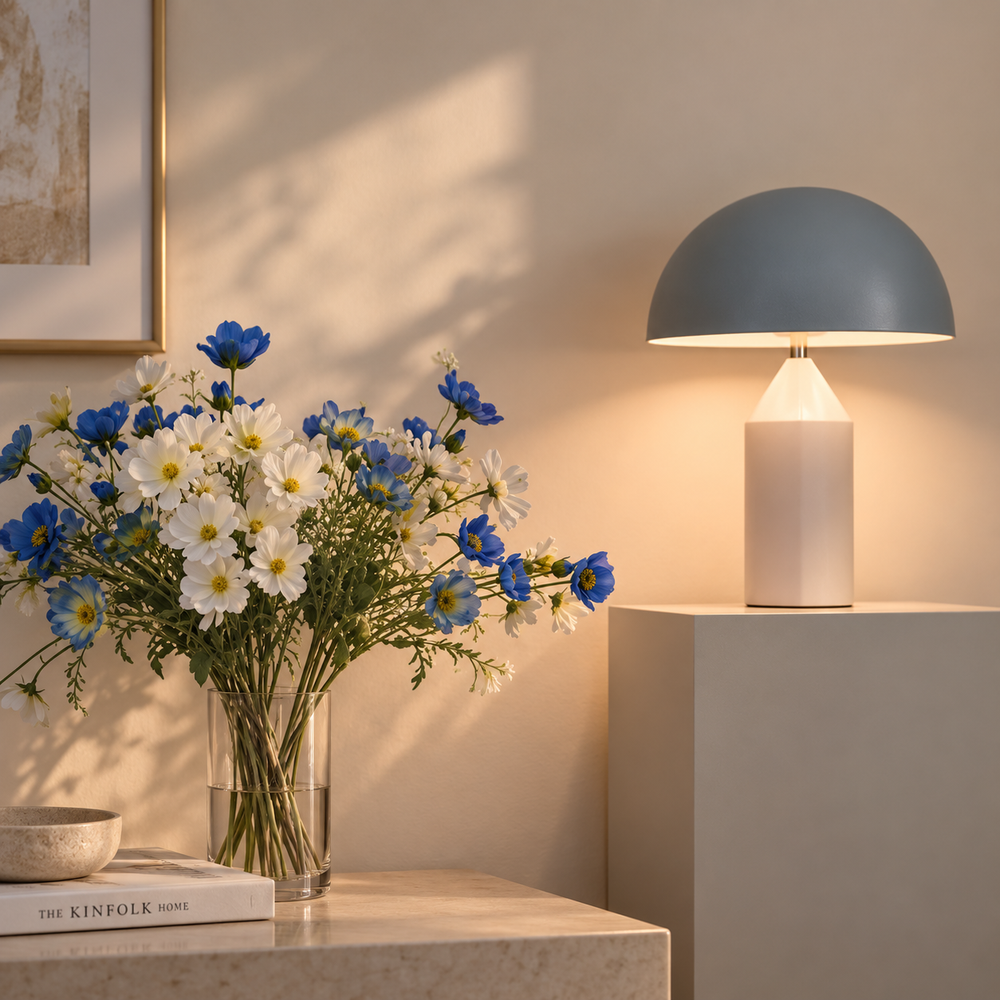
Base proportion, shade balance, material contrast, switch placement, diffusion, surface finish, and the quality of light determine whether a lamp succeeds as both object and illumination.
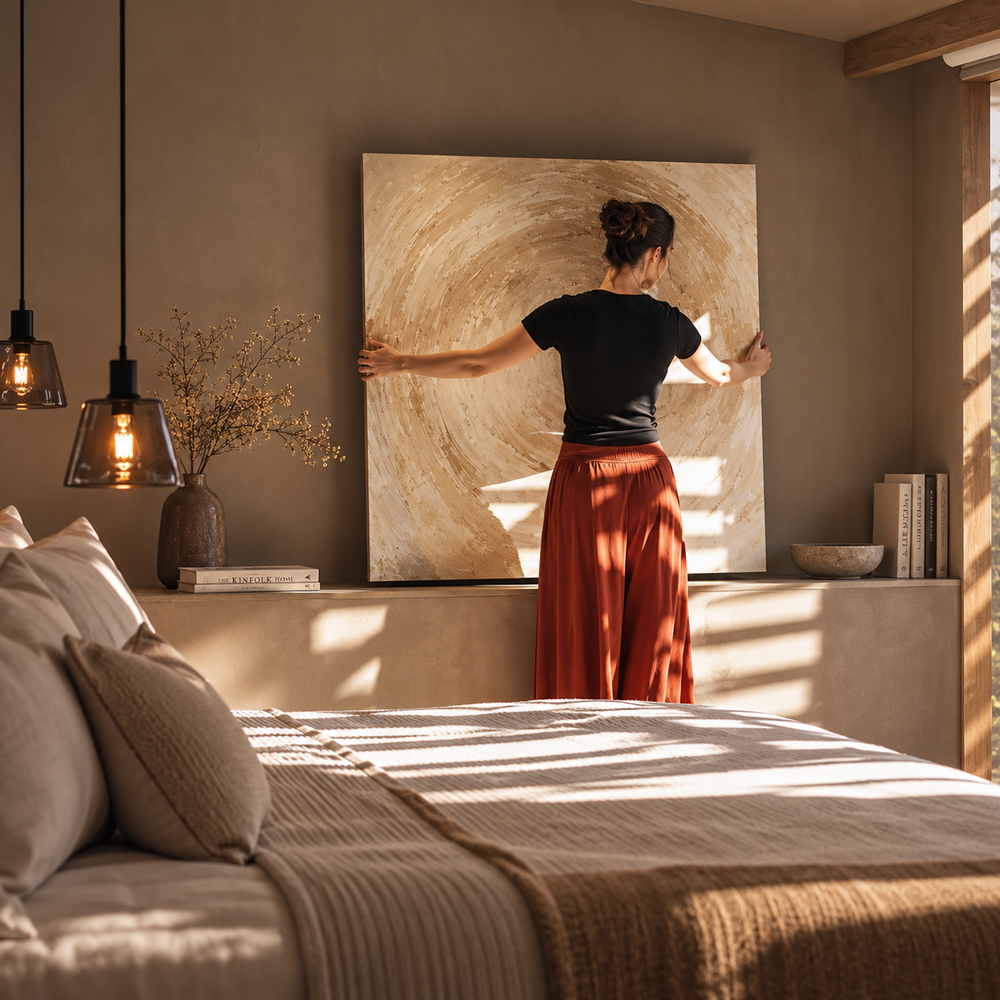
Scale, framing, surface texture, color balance, composition, dimensional depth, and how the piece interacts with nearby furniture are central to its impact within a room.
Finish changes the way material receives light. It can make an object feel relaxed, architectural, formal, tactile, reflective, aged, or newly precise. We treat finish as part of the structure of the design rather than a decorative layer added at the end.
A matte surface absorbs light and often emphasizes shape, texture, and volume. It works especially well when the form is intended to feel quiet, modern, and tactile.
Satin finishes introduce a controlled reflection that can enhance wood grain, painted surfaces, metal details, or cabinetry without creating excessive glare.
Polished stone, glass, and metal create sharper highlights and greater visual depth. Their reflective quality can add a refined counterpoint to soft upholstery and woven textiles.
Ribbing, fluting, carving, weaving, brushing, hammered metal, dimensional paint, and raised surfaces add shadow and rhythm that change as the viewer moves around the piece.
Weathered and distressed finishes can soften the precision of a new piece and introduce visual history. The effect is strongest when variation remains intentional rather than random.
Natural finishes allow grain, color movement, mineral pattern, fiber, and handmade variation to become part of the design rather than something to conceal.
These are useful cues when viewing furniture online. They cannot replace the specifications on an individual product page, but they help reveal whether a piece has been visually resolved with care.
Repeated seams, drawers, slats, pleats, panels, and hardware should create a coherent visual cadence.
Corners and transitions should support the intended character, whether crisp, rounded, beveled, softened, or organic.
Bases, legs, frames, rails, platforms, and mounting points should visually correspond to the scale they support.
Frequently touched surfaces benefit from comfortable edges, intuitive hardware, practical textiles, and considered finishes.
Decorative elements are strongest when they add identity without interrupting function or overwhelming the silhouette.
Care is part of the life of an object. Because materials differ, always follow the instructions supplied for the specific product. The principles below are general habits that help preserve the visual character of furniture and décor.
Use material-appropriate cleaning methods and avoid aggressive products unless the product care information specifically recommends them. Blot spills promptly rather than rubbing them deeper into a surface.
Strong direct sunlight can affect wood tones, textiles, artwork, and finishes over time. Curtains, placement, and occasional rotation can help manage uneven exposure.
Proper placement helps prevent unnecessary abrasion and impact. Keep circulation paths clear and allow enough space for drawers, doors, reclining functions, and modular movement.
Vacuum rugs and upholstery using suitable attachments, follow fabric-specific cleaning instructions, and periodically adjust cushions where the design allows.
Where applicable, periodically review accessible hardware, fittings, legs, and mounting points. Follow the product instructions before adjusting or tightening components.
Natural grain, veining, glaze movement, woven texture, and other material variations are often part of the visual character of a piece rather than imperfections to erase.
A few practical notes about materials, variation, care, product information, and the way we approach craftsmanship across the FormHaven collection.
No. Our assortment spans upholstered furniture, wood and stone tables, metal and ceramic décor, glass, textiles, lighting, wall art, and mixed-material designs. Always review the individual product page for the current material specification of the item you are considering.
Natural materials can show variation in grain, color, veining, texture, or surface character. These differences can be part of the intended appearance. Product-specific details should be used to determine what type of variation to expect for a particular item.
Follow the care guidance supplied with the specific product. As a general practice, wipe spills promptly, avoid excessive moisture, use appropriate surface protection, and be mindful of strong sunlight and heat. Different wood finishes may require different maintenance.
Consider dimensions, seat depth, upholstery composition, cushion construction, maintenance requirements, modular configuration where relevant, and the amount of everyday use the piece will receive. Measure your room and access path before ordering large furniture.
Start with the room and surrounding furniture rather than the table alone. Allow suitable circulation space, check seating clearance, consider the width and depth of nearby seating, and verify the exact dimensions listed on the product page.
Curtains can visually increase height, soften hard architecture, filter daylight, and add texture. Consider window dimensions, mounting position, panel width, curtain length, opacity, heading style, and the desired amount of fullness before selecting a design.
Screen settings, surrounding light, photography, and natural material variation can affect how colors appear. Product imagery should be considered together with the written description and available specifications.
The individual product page should be used for the most relevant dimensions, material information, included components, care details, and available product features. This craftsmanship page provides broader design guidance rather than specifications for a specific item.
The standard delivery timeframe is 3–5 business days, and all products include free shipping. Refer to the relevant order information for any details specific to your purchase.
FormHaven provides free returns and exchanges within 30 days. Review the applicable store policy and order details when preparing a return or exchange.
From the softness of a curtain to the structure of a sectional, from the surface of a coffee table to the small hardware on a dresser, we believe considered details create a home that feels warm, composed, and distinctly personal.
Contact FormHaven