
How to Layer a Room Without Making It Feel Busy
Warm modern interiors often look effortless, but their simplicity is carefully constructed. A successful room may contain a sofa, dining table, coffee table, rug, lighting, plants, wall art, and decorative objects, yet still feel calm and spacious. The secret is not owning fewer things. It is creating relationships between them.
The first relationship to consider is scale.
A large sofa naturally becomes one of the strongest visual elements in a living room, so the pieces around it should feel substantial enough to belong. A coffee table that is too small can make even a beautiful sofa appear oversized, while a rug that does not extend beyond the seating area can make the entire arrangement feel disconnected.
Begin with the major furniture pieces and allow them to establish the architecture of the room. The sofa defines the gathering area. The coffee table creates a center. A nearby dining table introduces a second function without necessarily dividing the room physically. When these elements are placed with clear sight lines and comfortable circulation, an open-plan interior can feel cohesive rather than crowded.
Color is the next layer.
Warm modern rooms rarely depend on one dominant statement color. Instead, they build atmosphere through closely related neutrals: warm white, sand, stone, caramel, natural wood, olive, and muted brown. These tones create continuity from one area to another and allow different furniture styles to live together comfortably.
This does not mean every piece should match. In fact, matching too precisely can make a room feel flat. A softly upholstered sofa beside a clean-lined wood coffee table creates more interest than two pieces with identical materials. Likewise, a smooth ceramic vase can sit beautifully beside woven textiles because the contrast adds depth without introducing visual noise.
Texture is especially important when working with a restrained palette.
An area rug can anchor a room while adding softness. Upholstery introduces another tactile layer. Wood provides warmth, ceramics contribute solidity, and woven baskets or curtains can soften architectural edges. When the colors remain related, these different surfaces create richness without making the room appear overly decorated.
Lighting should also be layered.
Natural light provides the changing character of the room throughout the day, but evening lighting is what determines whether the same space still feels inviting after sunset. Combine general lighting with smaller sources such as table lamps and floor lamps. A lamp beside a sofa or dresser creates a pool of light that feels more intimate than relying only on ceiling fixtures.
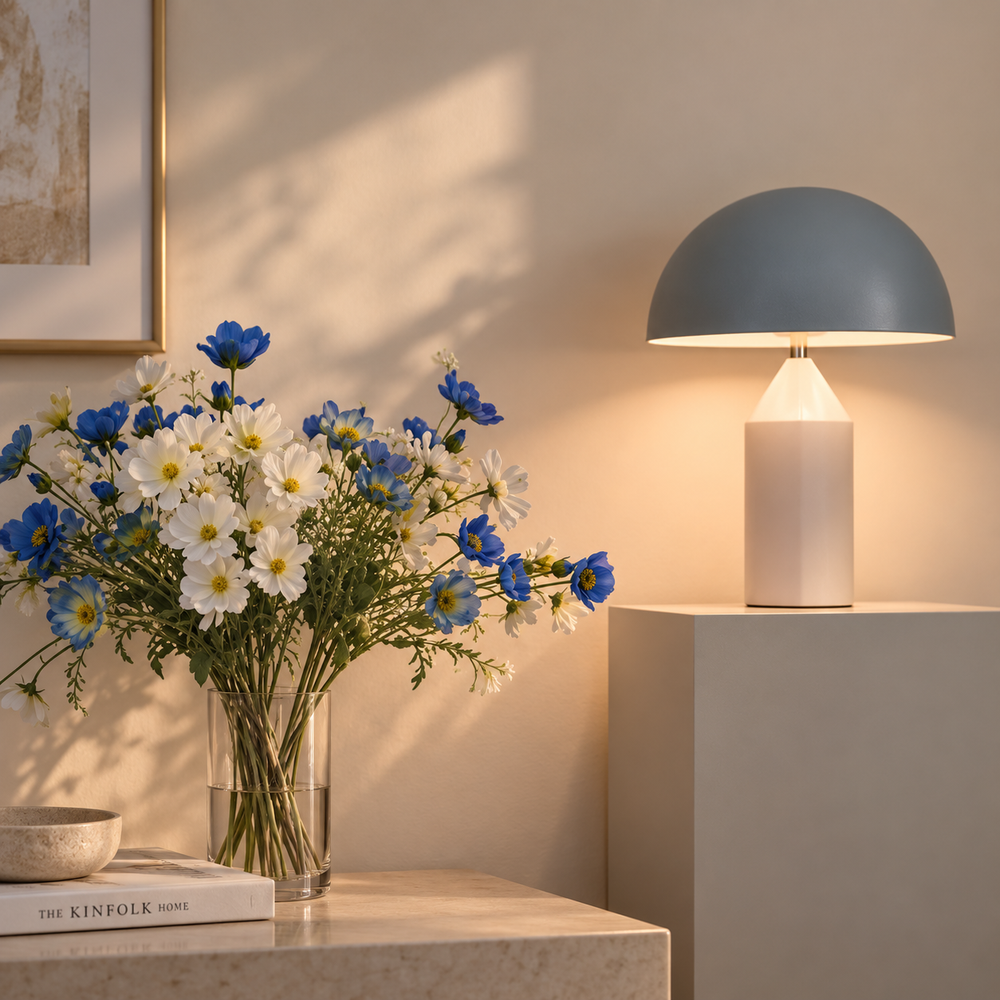
The shape of lighting matters too. A sculptural table lamp can function almost like a decorative object during the day and become a source of atmosphere at night. This dual role is particularly valuable in rooms where every object needs to earn its place.
Plants and decorative accents should be used with similar intention.
A tall plant can balance the height of a floor lamp or frame a corner near a window. Smaller vases and bowls work well on coffee tables and dressers because they introduce shape at a more intimate scale. Instead of spreading many small accessories across every surface, create a few composed groups and leave areas of negative space between them.
Books are another useful styling element. Beyond being personal objects, they create horizontal lines that can balance the vertical silhouettes of lamps, plants, and vases. A short stack on a coffee table can provide a base for a decorative object, while a few books on a console or dresser bring a lived-in quality to an otherwise polished arrangement.
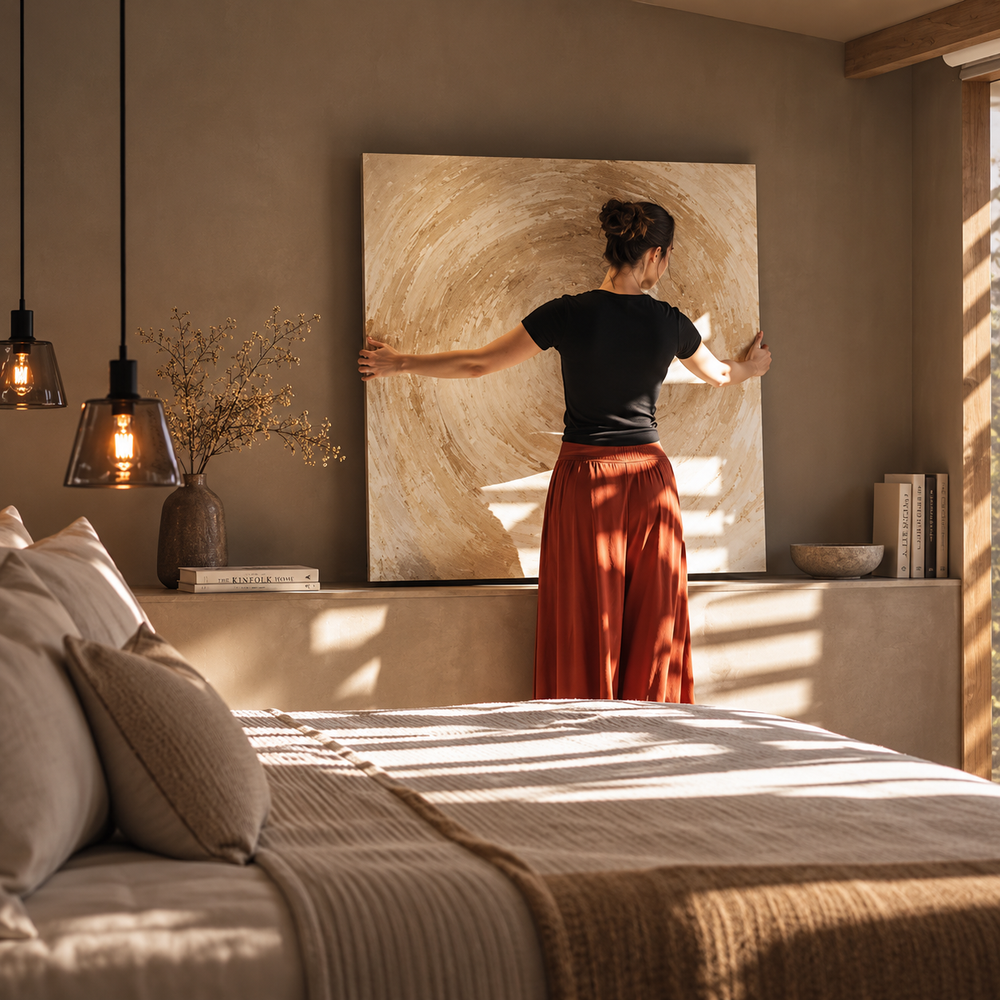
Wall art should connect with the room rather than simply fill empty space. Consider the proportions of the furniture beneath it. One larger artwork often feels calmer than a collection of many small frames. If you prefer a gallery effect, keep the color story controlled so the wall does not compete with the rest of the interior.
The final layer is movement.
A beautiful home needs clear pathways. Furniture should never feel like an obstacle course. Leave generous space around sofas, dining chairs, coffee tables, and entrances. This practical detail has a major visual effect: rooms with comfortable circulation naturally feel more luxurious because they appear less compressed.
Warm modern living is ultimately about balance. It combines the clarity of contemporary design with the emotional comfort of natural materials and familiar forms. The sofa should invite you to stay. The table should encourage gathering. The rug should soften the room. The lighting should change the mood as the day changes.
At FormHaven, this balance sits at the heart of the home: refined enough to feel considered, relaxed enough to be lived in, and warm enough to feel personal.
When every piece contributes without demanding attention, the room becomes more than a collection of furniture. It becomes a setting for everyday life.
