
How Lighting, Wood, and Art Create a Timeless Home
We often design rooms in daylight.
We think about where the sofa sits in relation to the window, how sunlight falls across a rug, or how a dining table looks during the afternoon. But some of the most atmospheric moments at home happen after the natural light begins to fade.
Evening changes an interior.
Edges soften. Materials become warmer. Lamps create smaller, more intimate zones. A wooden dresser gains depth, framed artwork becomes more dramatic, and familiar furniture begins to feel different under a lower, warmer light.
Designing for this transformation is one of the simplest ways to make a home feel more refined.
Begin with lighting at human height.
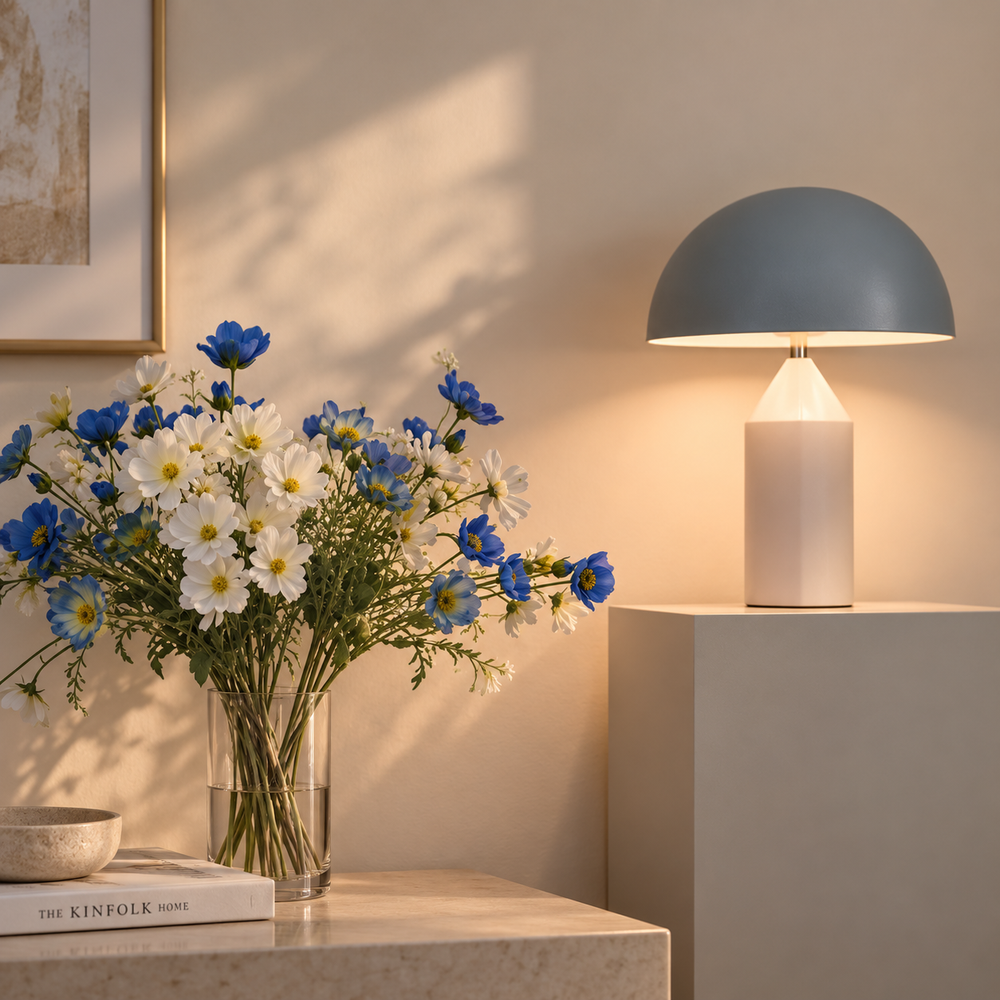
Ceiling fixtures may illuminate a room efficiently, but table lamps and floor lamps create atmosphere because the light sits closer to the furniture and the people using it. A table lamp on a dresser, console, or side table creates a focused glow that naturally draws attention to the surrounding objects.
The lampshade is just as important as the lamp base. Fabric shades diffuse light gently and reduce harsh contrast, making them particularly well suited to bedrooms, reading corners, and living rooms. A sculptural base in ceramic, stone, wood, or metal can remain decorative even when the lamp is switched off.
Think in pools of light rather than trying to illuminate every corner equally.
A brighter lamp beside a chair creates a natural place to read. A softer lamp on a dresser highlights wall art and decorative objects. Another source in an adjoining room creates visual depth through an open doorway. The subtle differences between these areas are what make an evening interior feel layered.
Wood becomes especially beautiful in this environment.
Warm lighting reveals the grain and tonal variation in coffee tables, dining tables, dressers, and bed frames. Darker wood can feel substantial and elegant, while lighter natural finishes remain relaxed and contemporary. Combining wood with softer materials—upholstery, curtains, rugs, and cushions—prevents the room from feeling formal.
This relationship between hard and soft surfaces is central to romantic modern interiors.
A structured dresser beneath a framed artwork can be softened with a vase of branches. A wooden table beside an upholstered chair feels more inviting when a textile is draped nearby. A polished lamp becomes warmer when placed beside books with aged paper covers or tactile ceramic objects.
Wall art takes on a different role at night as well.
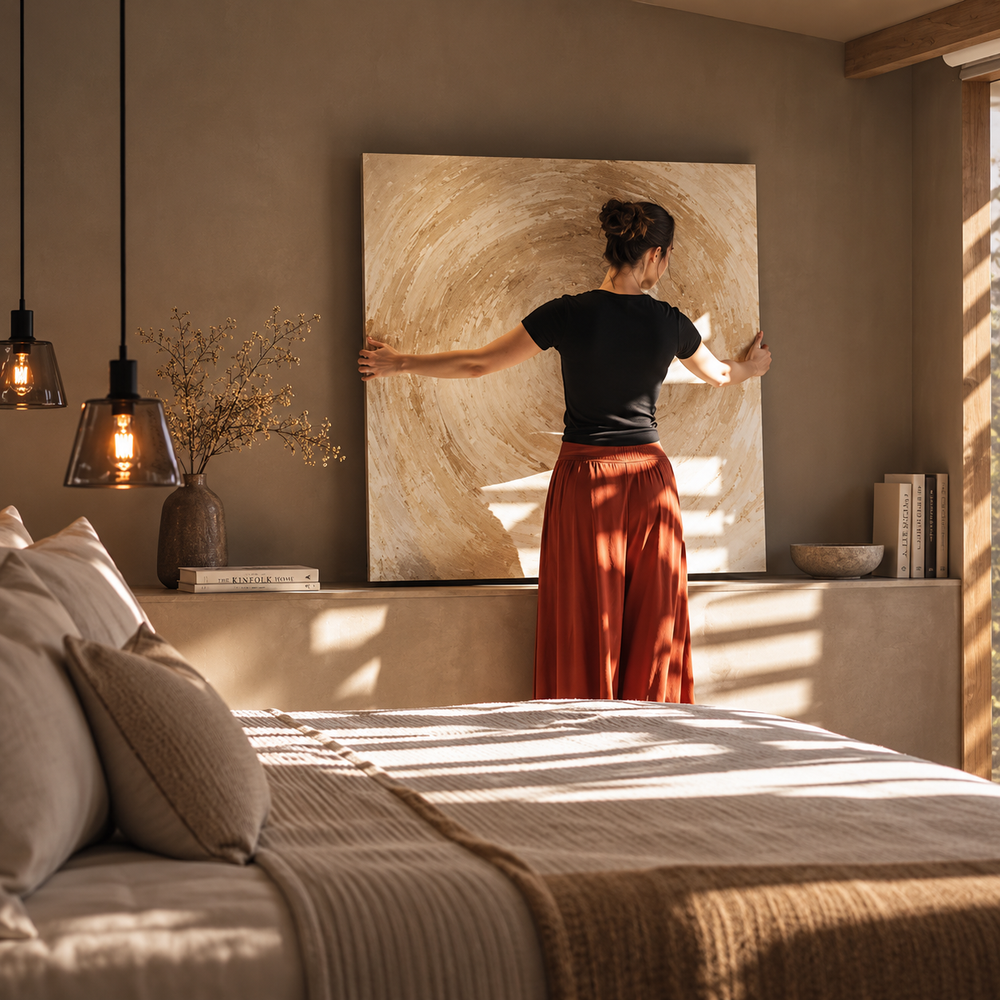
Instead of treating artwork as isolated decoration, consider how nearby lighting will interact with it. A table lamp can create a soft gradient across a wall, while a picture light can give a single piece a more architectural presence. Large artwork often benefits from restraint around it; allow the frame and image enough space to become part of the room rather than part of a crowded arrangement.
Curtains contribute significantly to evening atmosphere.
During the day they filter light, but at night they help contain it. Soft curtains visually close the room and make seating areas feel more intimate. Their folds also introduce vertical texture, which works particularly well beside the horizontal lines of sofas, beds, and dressers.
The rug is another element that becomes more noticeable in warm low light. Texture creates small shadows that give the floor greater depth. A rug beneath an armchair or seating arrangement can visually pull the furniture together and make the space feel sheltered.
Decorative objects should be chosen carefully in darker rooms because light naturally emphasizes reflective surfaces and silhouettes. A metallic bowl, glass vase, or glazed ceramic can catch the glow of a lamp and become a subtle focal point. You rarely need many reflective pieces; one or two are enough to create contrast.
Color also behaves differently after sunset.
Cream becomes warmer. Brown becomes richer. Olive and deep green appear more grounded. Black details become sharper against illuminated walls. This is one reason warm neutrals are so effective in timeless interiors: they change beautifully throughout the day rather than depending on one specific lighting condition.
The most successful evening rooms are not theatrical. They feel calm.
They offer enough light to read, talk, dine, and move comfortably while still preserving shadow. They contain furniture with weight, textiles with softness, and objects that feel collected rather than arranged for display.
At FormHaven, we believe a home should be considered across the full rhythm of the day. The same room that feels fresh in morning sunlight should become warmer and more intimate in the evening.
A thoughtfully placed table lamp, a beautifully proportioned dresser, a comfortable chair, a textured rug, and meaningful wall art can completely change how that transition feels.
When light, material, and furniture work together, the evening becomes more than the end of the day. It becomes one of the most beautiful ways to experience the home.
