
How Small Objects Give a Home Its Sense of Place
Large furniture defines the structure of a room, but smaller objects often determine how that room feels.
A sofa may establish comfort. A dining table may organize a gathering space. A rug may ground the layout. Yet it is often a vase on a console, a ceramic vessel on a shelf, or a pair of decorative objects beside a stack of books that gives the interior personality.
This is why vases are among the most versatile pieces in home decorating.
They can be sculptural or quiet, functional or purely decorative. They can carry flowers, branches, and greenery, or stand completely empty and still contribute shape, color, and texture to a room. The key is choosing and placing them with intention.
Start with silhouette.
A vase does not need elaborate ornament to create presence. A strong curve, tapered neck, rounded body, or irregular sculptural profile can become visually interesting simply through proportion. In minimalist spaces, this is particularly useful because the object adds character without requiring additional decoration.
Consider the architecture around the vase. A tall, narrow vessel placed beneath high ceilings can emphasize verticality. A rounded vase on a long, low dresser introduces contrast to the horizontal furniture. A pair of similar vessels can create rhythm, especially when their heights are slightly different rather than perfectly matched.
Material changes the mood just as much as shape.
Ceramic vases bring a tactile, handcrafted feeling to a room. Smooth stone-like finishes feel calm and contemporary. Metallic surfaces reflect light and can add a subtle sense of luxury. Glass feels lighter and is especially effective in bright interiors where sunlight can pass through or reflect across the surface.
For a romantic modern home, mixed finishes often create the most interesting result. A matte ceramic piece beside polished metal, for example, creates contrast while still feeling refined. The goal is not to assemble as many materials as possible, but to allow different surfaces to enhance one another.
Placement is equally important.
On a coffee table, a vase should support the overall composition rather than block conversation or sight lines. Lower arrangements work well in seating areas because they add softness without becoming an obstruction. On a dining table, the same principle applies: beautiful styling should never make the table difficult to use.
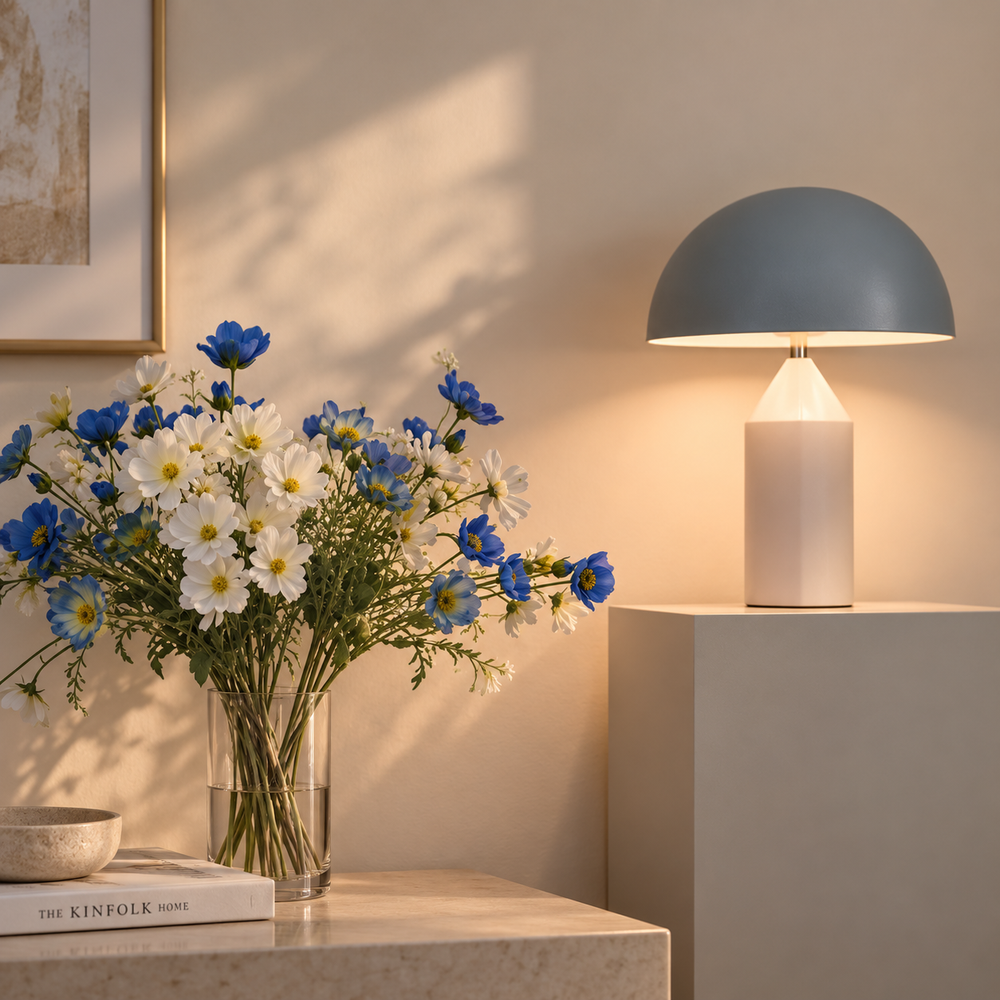
Console tables and dressers allow for taller arrangements. A vase filled with branches can add height beneath wall art or beside a table lamp. If the surface is long, avoid placing everything in a single line. Instead, group objects into small arrangements and leave open space between them.
Shelves require a slightly different approach. Because shelves already create repeated horizontal lines, vases can introduce curves that break up the geometry. Alternate between books, vessels, framed art, and open space. Not every shelf needs to be completely filled.
Flowers and greenery can transform the personality of a vase, but the arrangement does not need to be elaborate.
Loose branches create an architectural feeling. A small bunch of seasonal flowers adds romance. Olive branches or soft greenery provide a relaxed natural quality. Even a single stem can be enough if the shape of the vessel already has strong presence.
Color should relate to the room rather than match it exactly.
In neutral interiors, earthy terracotta, muted green, aged brass, cream, and soft black can add depth without disrupting the palette. Decorative ceramics with pattern can work beautifully as focal points when the surrounding furniture remains restrained. The more expressive the vase, the simpler the nearby styling should usually become.
This balance is what prevents decorative objects from turning into clutter.
One of the easiest styling mistakes is placing too many pieces of similar size together. Variation creates interest. Pair a taller vase with a low bowl. Place a small object beside a stack of books. Combine something organic with something geometric. Each piece should have enough space around it to be noticed.
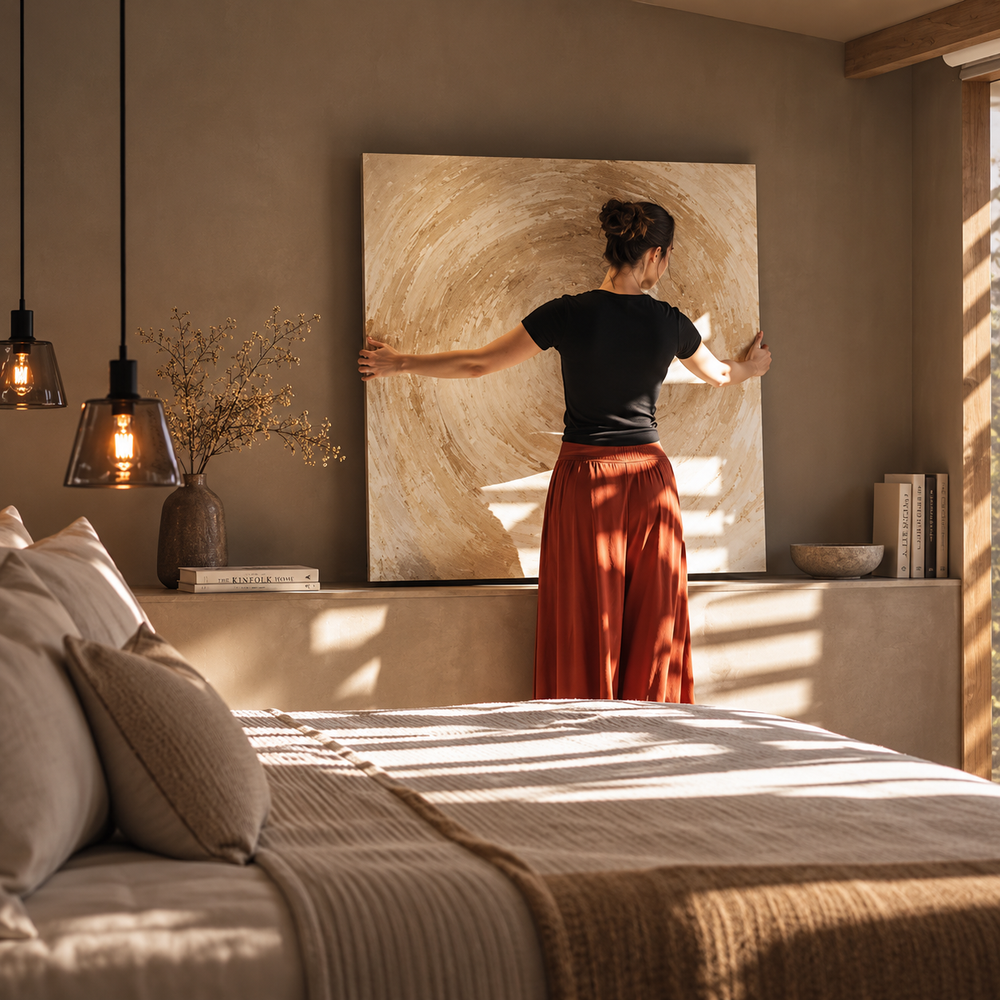
Vases also offer an easy way to refresh a room without changing major furniture. Moving one from a dining table to a dresser, adding seasonal branches, or introducing a new shape can subtly change the entire composition.
At FormHaven, we see decorative accents as part of the architecture of everyday living. They are not simply finishing touches added after the important decisions are made. They help create rhythm, memory, and character.
A well-chosen vase can make an empty corner feel intentional, give a familiar table a new focal point, or bring a quiet sense of artistry to an ordinary surface.
Sometimes the smallest object in the room is the one that makes the space feel most complete.
